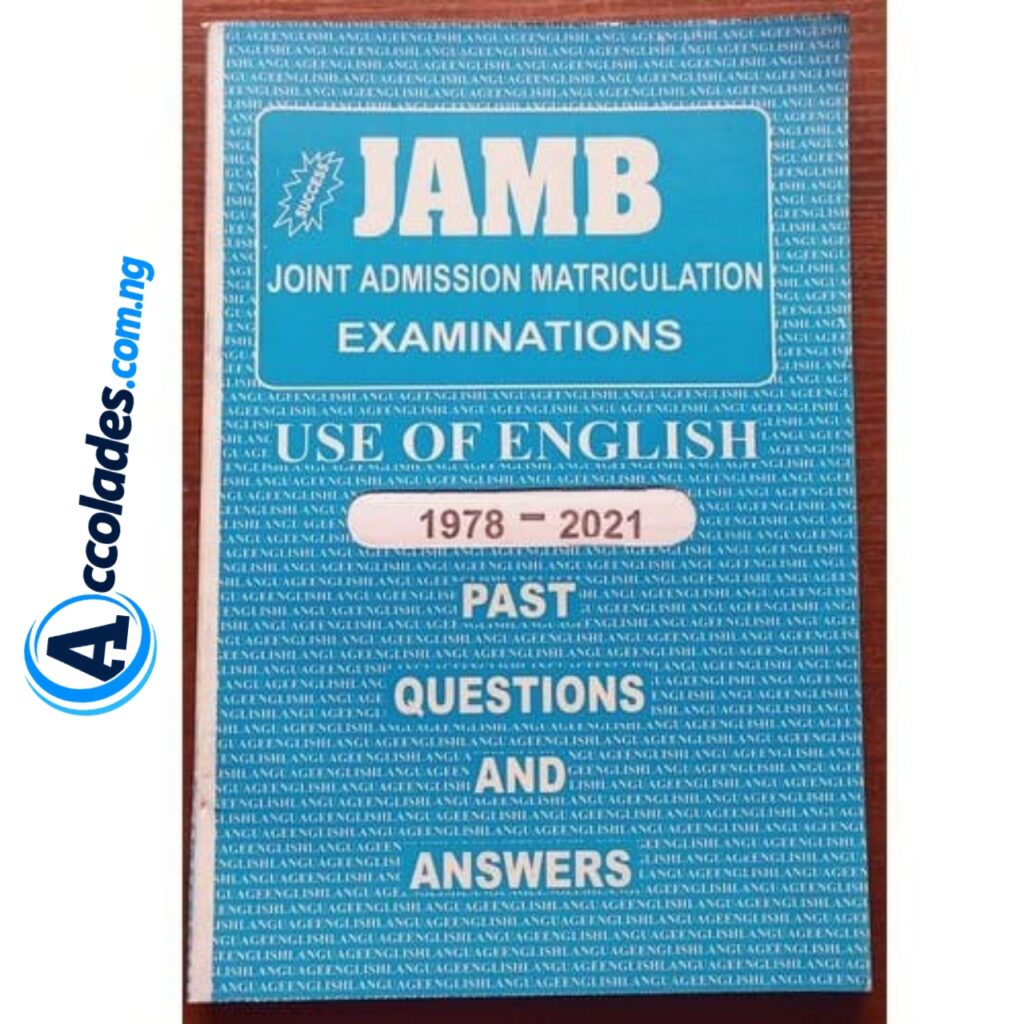
Ask majority of the UTME candidates which subject worries them the most, and Mathematics will come up almost every time. The funny part? It is also the subject where a little smart practice pays off the fastest. The reason is simple: JAMB past question for Mathematics repeats the same ideas year after year, just dressed in different numbers. Once you see the pattern, the paper stops feeling like a monster.
In this blog post, I will show you how the Mathematics paper is set, which topics keep coming back, how to use past questions the right way, and where to get a clean copy with answers.
Why JAMB Past Questions for Mathematics Matter So Much
JAMB does not set questions out of thin air. Every question is drawn from the official syllabus, and the board has a habit of testing the same skills repeatedly. A question on indices in 2015 may come back in 2022 with only the figures changed.
When you practise with past questions, three things happen:
- You learn the style. JAMB phrases questions in a particular way. Seeing it often means no surprises on exam day.
- You find your weak spots. If you keep missing probability questions, now you know where to spend your week.
- You build speed. Maths is a race against the clock. Timed practice trains your brain to skip, return, and finish.
The Topics That Show Up Again and Again
You cannot cover everything perfectly, so start with what the examiners love. From reviewing several years of papers, these areas appear most often:
- Number and Numeration: indices, logarithms, surds, number bases, fractions, ratio and percentages.
- Algebra: quadratic equations, simultaneous equations, variation, inequalities, polynomials.
- Geometry and Trigonometry: circle theorems, bearings, angles of elevation, sine and cosine rules.
- Mensuration: area and volume of cones, cylinders, sectors and spheres.
- Calculus: differentiation of polynomials, maxima and minima, simple integration.
- Statistics and Probability: mean, median, mode, simple probability, permutation and combination.
- Coordinate Geometry: gradient, midpoint, equation of a straight line.
If you are short on time, give extra attention to algebra and number work. Together they usually make up a big share of the paper.
Three Solved Examples in the JAMB Style
Here is the kind of question you will meet, with the thinking behind each answer.
Example 1 (Indices): Solve 2x+1 = 32.
Write 32 as 25. Now the bases match, so x + 1 = 5, which gives x = 4.
Example 2 (Variation): y varies inversely as x. If y = 4 when x = 3, find y when x = 6.
Inverse variation means y = k/x. From 4 = k/3, k = 12. So when x = 6, y = 12/6 = 2.
Example 3 (Calculus): Differentiate y = 3x² − 5x + 2.
Bring the power down and reduce it by one for each term: dy/dx = 6x − 5.
Notice how none of these needs a calculator or long working. JAMB rewards clean methods, not heavy calculations.
📥 Download Now: JAMB Maths Past Questions
Tap the button to chat with us on WhatsApp
How to Use JAMB Past Questions for Mathematics the Smart Way
Many candidates download past questions, glance through them, and feel productive. That is not practice. Try this routine instead:
- Start untimed. In the first week, solve questions slowly and understand every step. Speed comes later.
- Sort by topic. Take one topic at a time, like logarithms, and do all the past questions on it across several years.
- Go through the answers you got wrong. Do not just copy the correct option. Redo the question until you can explain why it works.
- Move to timed sets. Give yourself about 30 minutes for 20 questions, then increase to the full 40.
- Keep a mistakes notebook. Write formulas and errors you repeat. Read it the night before the exam.
You will be surprised how quickly your score moves when you stop guessing and start learning from errors.
Common Mistakes That Cost Candidates Marks
- Memorising answers instead of methods. The numbers change. If you only remember option C, you will struggle when the question twists.
- Ignoring the syllabus. Always check what JAMB expects. You can view the official syllabus on the JAMB official website.
- Spending too long on one question. If a problem eats more than two minutes, mark it and move on.
- Weak basics. Fractions, BODMAS and simple algebra errors ruin otherwise correct solutions.
A Simple 4-Week Plan for Mathematics
Week 1: Number and numeration plus basic algebra. Week 2: Geometry, trigonometry and mensuration. Week 3: Calculus, statistics and probability. Week 4: Full timed past question sets and revision of your mistakes notebook.
If you have more time, simply stretch each stage. If you have less, concentrate on the high-frequency topics listed earlier.
Combine Mathematics with Your Other Subjects
Remember, you write four subjects, so your preparation cannot revolve around Maths alone. Candidates who also practise English and the sciences tend to balance their scores better. You may find these helpful:
- Physics JAMB past questions and answers PDF
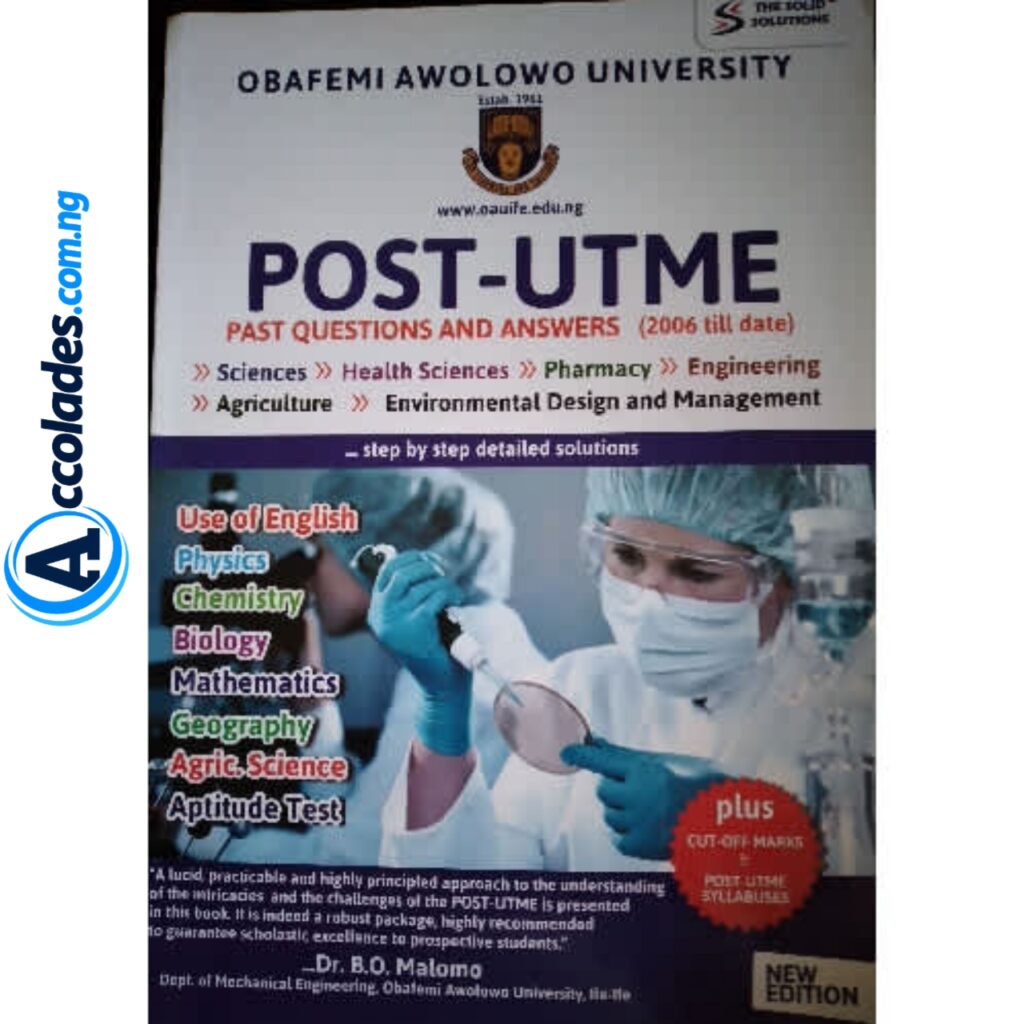
- OAU post-UTME past questions guide
- More JAMB past questions on Accolades
Where to Get JAMB Past Question for Mathematics With Answers
A good past question pack should give you several years of questions in one place, with correct answers so you can mark yourself. It should also be neat and readable on your phone, because that is where most students study. Avoid blurry scans and random copies that carry wrong answers; a wrong answer you trust is worse than no answer at all.
If you want a clean Mathematics pack, you can request it directly from us and we will send it to you on WhatsApp.
Frequently Asked Questions
Do JAMB Mathematics questions really repeat?
The topics repeat heavily, and sometimes the exact question style does too. That is why practising several years of papers is so effective.
How many past question years should I solve?
Aim for at least the last 10 years. More is better, but quality of review matters more than quantity.
Can I pass Mathematics without a calculator?
Yes. JAMB questions are designed to be solved with simple steps. Strong mental arithmetic gives you an edge.
What is a good score in UTME Mathematics?
Since each subject is marked out of 100, anything above 70 helps your aggregate, but your course and university cut-off matter most.
Final Thoughts
Mathematics rewards patience and repetition. Study the syllabus, practise topic by topic, review every mistake, and then train under timed conditions. Do that consistently with reliable JAMB past question for Mathematics materials, and the exam hall will feel far more familiar than frightening.
Ready to start? Grab your copy and begin with one topic today. Small daily effort beats last-minute cramming every single time.
Written by Accolade, Accolades.com.ng